Small Cleaning Tools
The tiny tools that make 'cleaning the whole place' feel like 'wipe this one spot' — so you actually do it.
Short answer: Short answer: a small kit of targeted cleaning tools — a microfiber cloth set, a crevice brush, a sink strainer, and a lint roller — removes the daily friction that makes cleaning feel like a project. None costs much, but together they turn 'I'll do it this weekend' into 'done in two minutes now'. Choose a microfiber set, a long-handled crevice brush, and a reusable sink strainer as the core three.
Why you might need it
Big cleaning sessions fail because they are expensive in time and willpower. Small tools win by shrinking the unit of cleaning to a single spot you can fix in under a minute. A crevice brush handles the grout line you usually ignore; a sink strainer stops the clog before it forms; a microfiber cloth polishes a surface you walk past ten times a day. The home stays visibly clean not because you deep-clean often, but because tiny messes get killed at the source, daily, almost for free.
The real problem it solves
The trap is owning one all-purpose sponge that is too big for details and too gross to keep. Another is buying a 'cleaning gadget' that does one obscure job and lives in a cupboard. People also skip the cheap preventive tools — a $2 sink strainer — and then pay a plumber $80 to clear a hair clog. The pattern: we over-spend on hero products and under-buy the small, boring tools that actually prevent mess.
How to choose & use it
- Start with the core three: microfiber cloths, crevice brush, sink strainer.
- Store them at the point of use (under-sink caddy, not a distant cupboard).
- Wipe a surface the moment you notice a spot — under a minute, no setup.
- Empty the sink strainer weekly; rinse and reuse instead of binning.
- Add a lint roller and pan scrubber only for the specific messes you actually have.
Key specifications
| Core set | Microfiber cloths ×6, crevice brush, sink strainer |
|---|---|
| Material | Microfiber (80/20 blend), PP/steel brush, silicone/stainless strainer |
| Reusable | Cloths and strainer wash and reuse; cuts waste |
| Best for | Daily wipe-downs, grout lines, sink clogs, pet hair |
| Storage | Under-sink caddy keeps tools at the point of use |
| Care | Machine-wash cloths; rinse brush and strainer after use |
How it compares
One all-purpose sponge
ProsAlready have it
Watch outToo big for details, gets gross, spreads germs
Targeted small-tool kit (recommended)
ProsEach tool fits a real daily mess; prevents bigger jobs
Watch outNeeds a small upfront assortment
Single 'hero' cleaning gadget
ProsSatisfying to buy
Watch outDoes one narrow job; lives unused in a cupboard
Beyond the basics
Small cleaning tools are the antidote to the all-or-nothing cleaning mindset that keeps homes messy. We imagine cleaning as a Saturday morning event, so we put it off — and the mess compounds. The fix is not more motivation; it is smaller, better tools that make a two-minute fix the default.
Microfiber is the foundation and it is genuinely better than a cotton rag, not just greener. The split fibres create tiny hooks that grab dust and absorb several times their weight in liquid without spraying chemicals everywhere. A quick daily pass with one cloth keeps surfaces looking clean, which psychologically makes the whole room feel maintained even if you have not deep-cleaned in weeks.
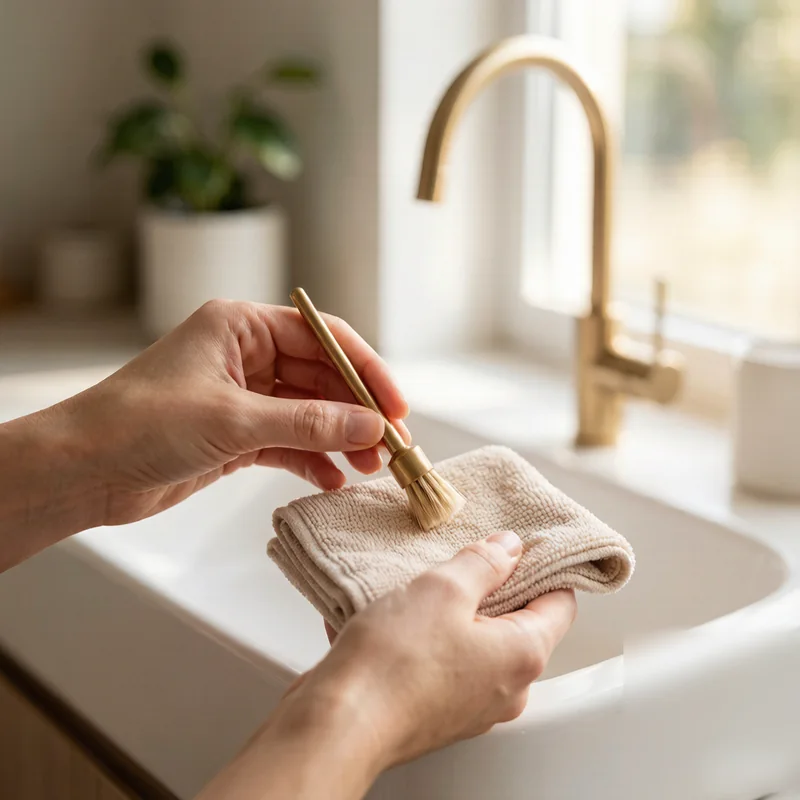
The crevice brush is the unsung hero. Grout lines, the rim of a faucet, the gap around a stove — these are the places a sponge cannot reach and a cloth smears over. A narrow stiff-bristled brush with a long handle turns a skipped spot into a ten-second swipe. Once those lines are clean, the eye reads the whole surface as clean, which is most of the battle.
Preventive tools are the highest ROI in the category. A reusable sink strainer costs almost nothing and heads off the most common, most irritating plumbing call-out. We happily spend on a flashy gadget that does one obscure job, then skip the boring $2 tool that would have stopped the clog. Flip that priority and most 'cleaning emergencies' never happen.
Storage is the quiet multiplier. A kit kept in a closet under 'cleaning supplies' will not get used for daily wipe-downs. The same kit in a small caddy under the sink, at the point of use, gets used constantly. The tool you can reach without thinking is the tool that actually changes your home — not the one you have to go fetch.
Think of the kit as preventive maintenance for your attention, too. A visible clean surface lowers the mental load of being home; a grimy one quietly drains you every time you walk past. The small tools that make a two-minute reset possible are really buying back a little calm, not just hygiene. That is why the cheap kit outperforms the occasional deep clean, both financially and psychologically.
If you share a space, the kit also reduces friction between people. 'Who was supposed to clean that?' disappears when the tool for the spill is right there and the fix takes ten seconds. Shared homes run smoother when the barrier to tidying is near zero, and these tools are the cheapest way to get the barrier that low.
FAQ
Why not just use one sponge for everything?
A single sponge is too bulky for grout lines and too dirty to keep using on surfaces you eat from. Small dedicated tools — a crevice brush for lines, a microfiber cloth for wipe-downs — do each job better and stay cleaner. The kit costs little and removes the 'cleaning is a project' feeling.
What are the three tools everyone should own?
Microfiber cloths for daily dust and wipe-downs, a long-handled crevice brush for grout and corners, and a reusable sink strainer to stop clogs before they start. Those three prevent the majority of small messes from ever becoming big cleaning sessions.
Are reusable tools actually worth it vs disposable?
For cloths and strainers, yes — you wash and reuse them for months, which is cheaper and less wasteful than buying packs of wipes and mesh strainers constantly. The only true disposables worth keeping are things like a lint roller's adhesive sheets, and even those have washable alternatives.
How do I make cleaning a daily habit?
Shrink the unit of work. Keep the tool where the mess is and fix one spot the moment you see it — under a minute, no setup. When 'cleaning' means 'wipe this one bit now', it actually happens. A weekend blitz never sticks; two-minute daily fixes do.
Will a sink strainer really prevent clogs?
Mostly yes for hair and food debris, which are the usual culprits. A reusable strainer catches them at the drain so you empty them into the bin instead of watching them disappear into the pipe. It will not stop a grease buildup from cooking oils, but it eliminates the most common, most annoying clogs cheaply.