Shaker Bottles
The 2-second fix for clumpy protein — and the one bottle you'll actually keep using.
Short answer: Short answer: a good shaker bottle is worth it the moment you drink protein powder, pre-workout, or any supplement that clumps. The right bottle mixes smoothly, seals without leaking in a gym bag, and survives the dishwasher. Look for a secure screw cap, a whisk ball or mesh, and BPA-free Tritan plastic or stainless steel.
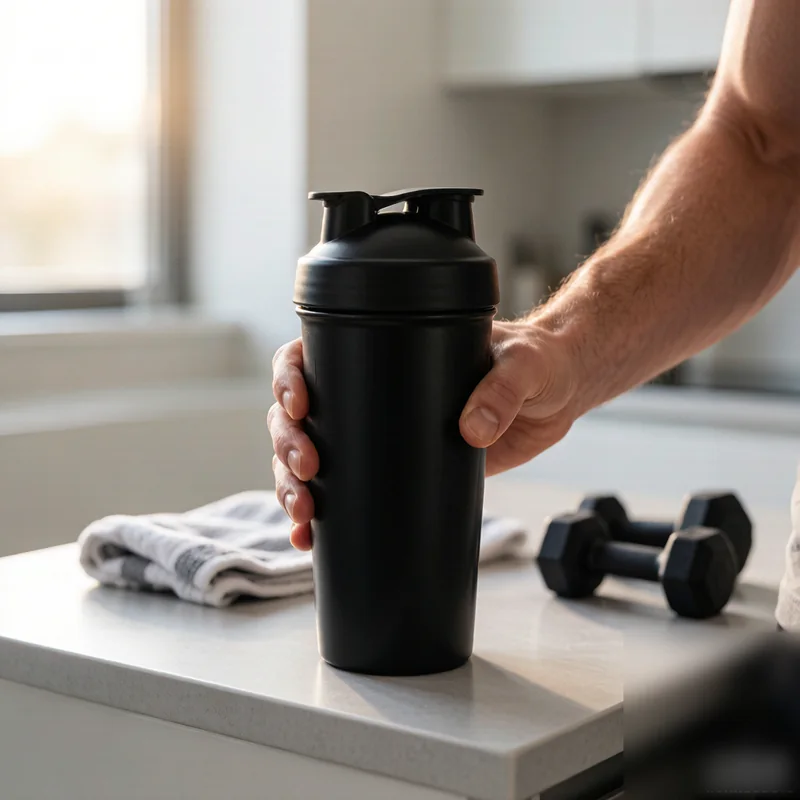
Why you might need it
Powder in a normal water bottle does not mix — it balls up, sticks to the sides, and leaves you chewing grit. A shaker exists to solve exactly that: a small agitator (wire ball or plastic grid) breaks the powder into suspension as you shake. Beyond mixing, the real daily value is reliability. A leaky bottle ruins a laptop bag; a smelly one gets abandoned. The bottle you keep using is the one that seals, rinses clean, and doesn't retain odour after a post-gym protein shake left in a hot car.
The real problem it solves
Cheap shakers fail in predictable ways: the flip cap pops open in a bag and soaks everything; the thread cracks after a month of dishwashing; the plastic holds a sour milk smell no amount of scrubbing removes. Another trap is size — a 300 ml bottle is useless for a double scoop plus water, while a 1 L monster is awkward to carry. People also buy 'cute' bottles with weak seals and learn the hard way on a train.
How to choose & use it
- Add liquid first (half the bottle), then powder — less clumping on the bottom.
- Drop in the whisk ball or use the built-in mesh agitator.
- Screw the cap firmly and lock the flip lid if it has one.
- Shake 10–15 seconds; unscrew slowly to release pressure.
- Rinse immediately after use; weekly deep-clean with warm water and a drop of dish soap.
Key specifications
| Capacity | 600–700 ml everyday; 800 ml+ for doubles |
|---|---|
| Material | BPA-free Tritan plastic or 18/8 stainless steel |
| Agitator | Stainless whisk ball or integrated mesh |
| Lid | Screw cap with locking flip spout |
| Dishwasher | Top-rack safe on most Tritan models |
| Best for | Protein, pre-workout, BCAAs, daily water |
How it compares
Plain water bottle
ProsAlready own one
Watch outPowder clumps, no agitator, often leaks
Tritan shaker with whisk ball (recommended)
ProsSmooth mix, leak-proof, odour-resistant, cheap
Watch outPlastic can scratch over years
Stainless steel shaker
ProsKeeps drinks cold, very durable
Watch outHeavier, pricier, dentable
Beyond the basics
A shaker bottle is the unglamorous hero of any supplement routine. Nobody posts it on social media, but it is the tool you touch every single training day. Getting it right means one less tiny friction between you and actually drinking your protein — and friction is what kills consistency.
The mixing mechanism matters more than the branding. A loose wire whisk ball has been the standard for two decades because it works: as you shake, it spins and shears the powder clumps against the bottle wall. Newer mesh inserts do the same job with nothing to lose. Either is dramatically better than a bare bottle where powder just sinks and balls up at the bottom.
Leak-proofing is where cheap bottles betray you. The difference between a trusted shaker and a regret is the lid. A proper screw cap with a secondary locking flip spout stays shut through a full gym bag's worth of jostling. Before you ever toss it in a bag, do the invert-and-shake test with water — if a single drop escapes, it never goes near your laptop.
Material choice is a trade-off. Tritan plastic is light, tough, and cheap, and good grades resist the sour smell that ruins cheap bottles. Stainless steel keeps a shake cold through a long commute and feels premium, at the cost of weight and price. For most, a Tritan shaker is the rational default; upgrade to steel only if you value cold retention.
Finally, treat the shaker as part of your hygiene, not just gear. Rinse it the moment you finish. A thirty-second rinse after each use prevents 90% of the odour complaints people have, and means the bottle stays in rotation instead of migrating to the back of a cupboard. Small habit, big difference to whether you keep using it.
A detail people overlook: capacity math. A single scoop of most proteins is about 30 g, and two scoops plus 300 ml of liquid already pushes a 500 ml bottle to the brim, leaving no room to shake. The 600 to 700 ml size exists precisely so a real serving mixes without overflow. If you ever add oats, a banana, or milk, size up to 800 ml without thinking twice.
Colour and opacity are a quiet usability win too. Clear bottles let you see whether powder is fully dissolved and make rinsing easier; opaque bottles hide residue and smell longer. If you care about hygiene as much as mixing, a clear Tritan shaker is the pragmatic pick over a trendy opaque one.
FAQ
Do I really need a shaker, or can I use any bottle?
You can use any bottle, but you will fight clumps constantly. A shaker's agitator exists for one job — turning powder and liquid into a smooth drink in ten seconds. If you drink protein more than once a week, the small cost pays back in saved annoyance immediately.
Why does my shaker smell even after washing?
Protein residue left to dry in a warm bottle ferments. The fix is prevention: rinse within an hour and let it air-dry open. If odour has already set in, a soak with warm water and a little baking soda, plus a bottle brush, usually clears it. Choosing Tritan over cheap plastic also helps because it resists odour absorption.
What size shaker should I buy?
For most people 600–700 ml is ideal: enough for a double scoop and water without being bulky. If you take large post-workout shakes or add oats/fruit, go 800 ml or 1 L. Avoid anything under 500 ml unless it is purely for intra-workout sips.
Are plastic shakers safe?
Look for BPA-free Tritan or officially food-grade plastic. Reputable brands use materials that are safe for repeated use and dishwashing. If you prefer zero plastic contact, stainless steel is the alternative, though heavier and more expensive.
Wire ball or built-in mesh — which is better?
Both work. A stainless whisk ball is foolproof and easy to clean, while an integrated mesh never gets lost. If you sometimes forget to wash the ball, the built-in mesh is the lower-maintenance choice. Either beats shaking powder in a bare bottle.